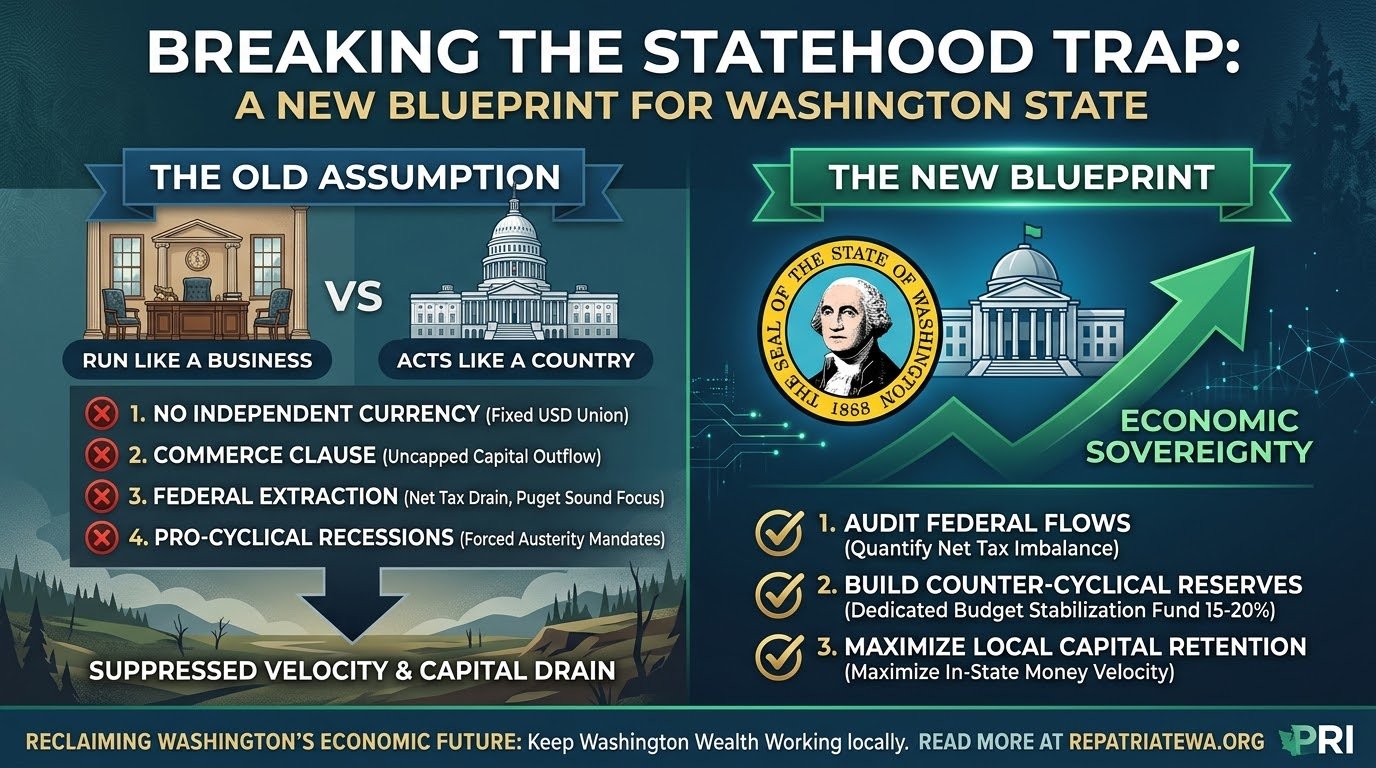
Breaking the Statehood Trap: A New Blueprint for State Economic Sovereignty
Forget the myth that states function like businesses or sovereign nations. Explore why Washington State is caught in a structural 'statehood trap,' and discover the new policy blueprint needed to protect local wealth, build counter-cyclical reserves, and achieve economic sovereignty.
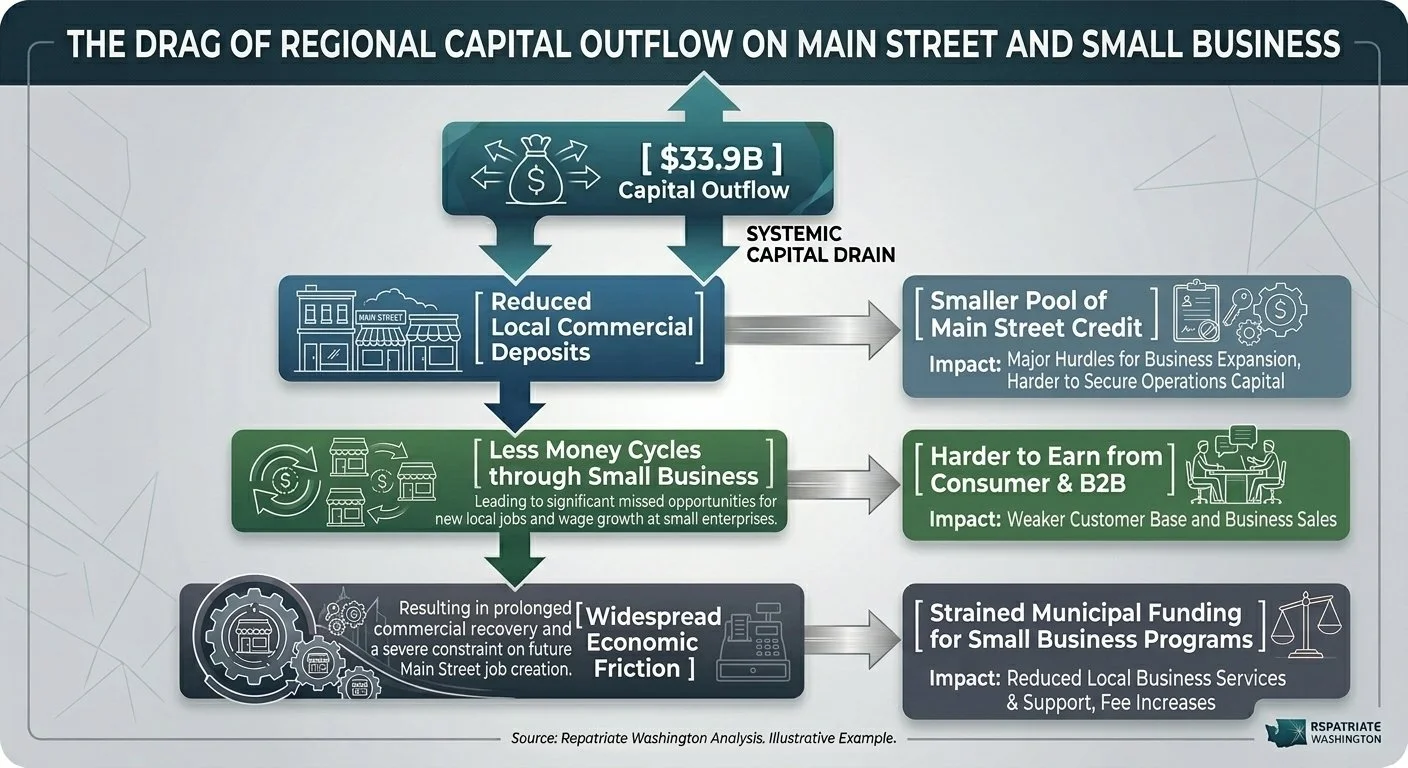
The Main Street Squeeze: How Federal Capital Outflow Hits Local Small Businesses
When $33.9 billion in net capital leaves Washington State in a single year, the real-world impact hits Main Street first. Explore how regional capital drain artificially depresses local business activity, tightens commercial lending, and drives a downstream tax and fee shift onto local enterprise.
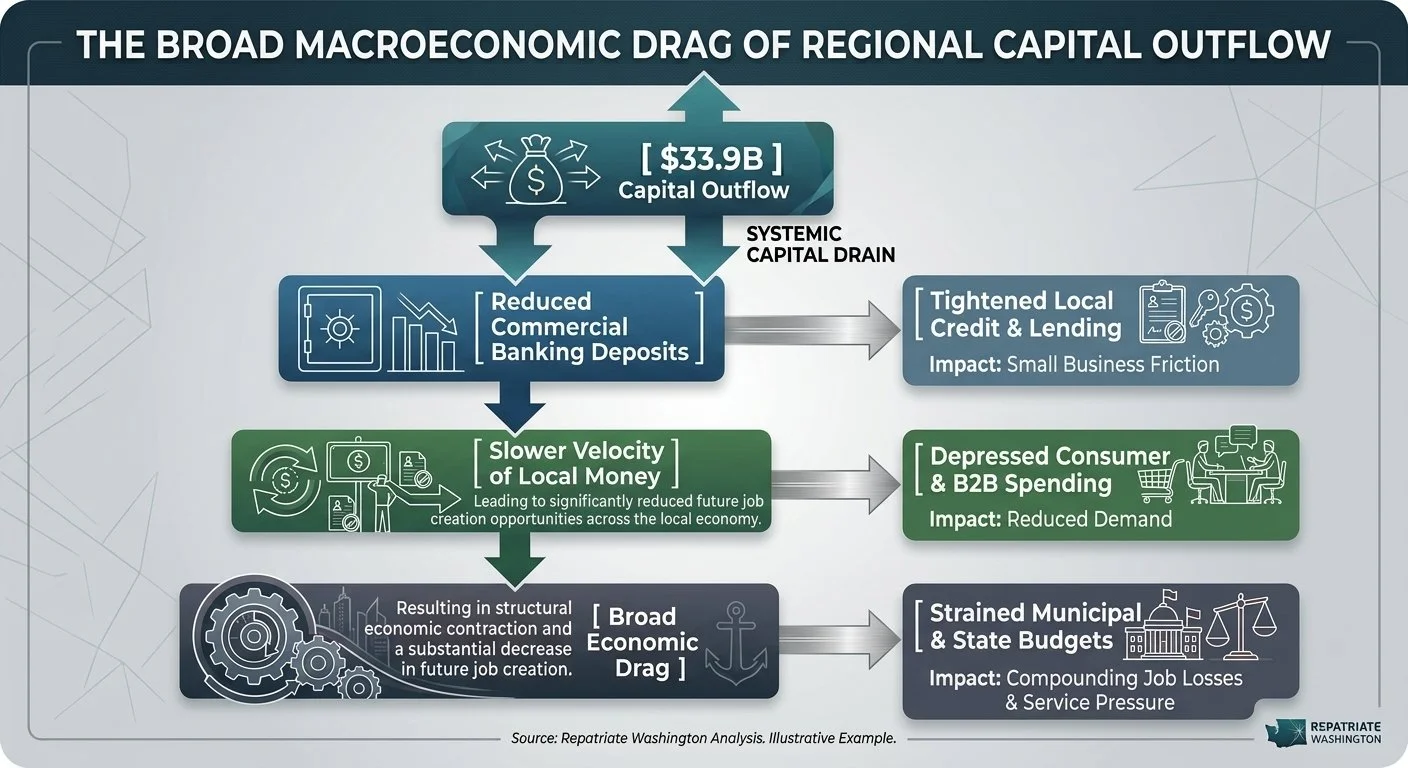
Macroeconomic Disruption & Systemic Drag: Why Tracking Washington’s Federal Capital Flow Matters
Discussions around Washington's status as a net donor state often focus on fairness, but the real issue is structural economic drag. Explore how extracting tens of billions in liquidity disrupts regional banking deposits, reduces money velocity, and imposes compounding friction across our state's economy.
Prisoners dilemma for local governments.
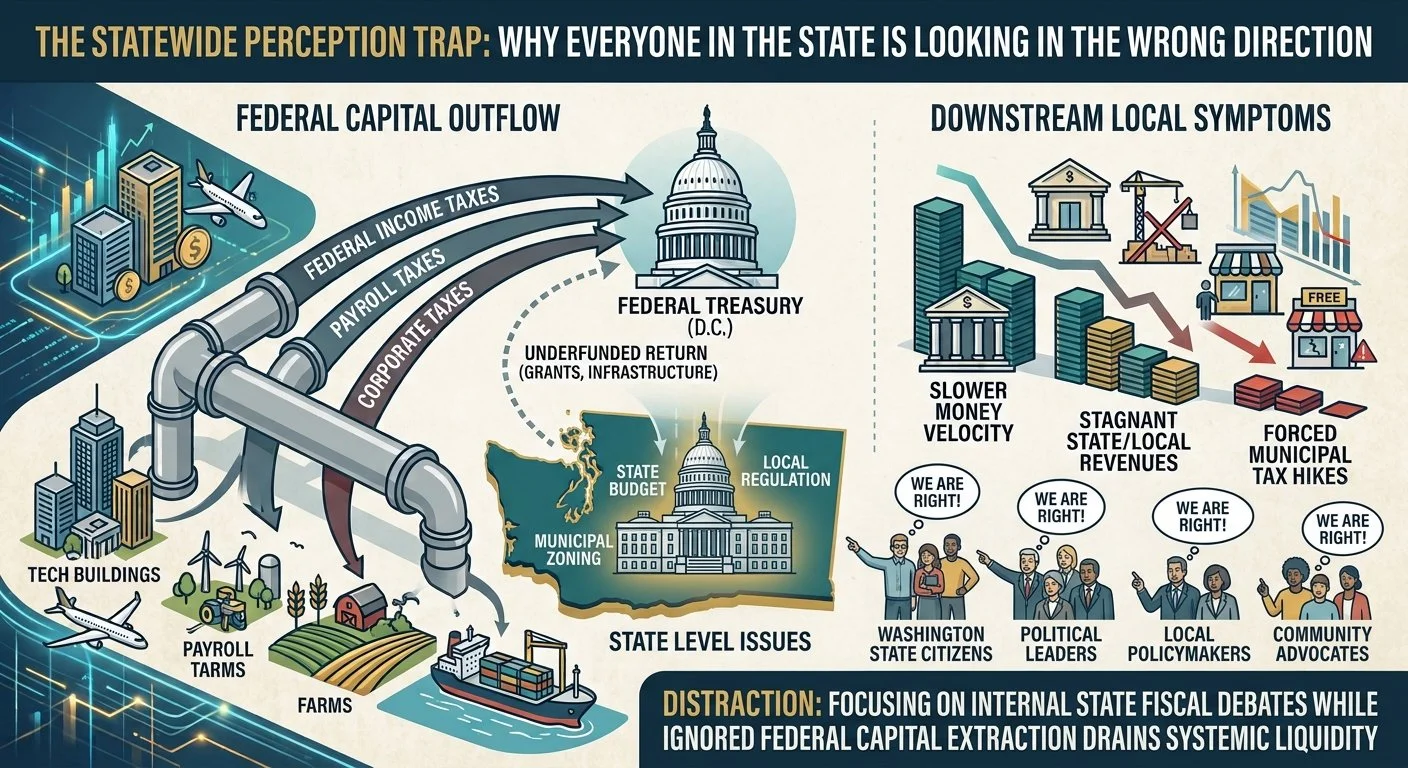
Downstream Symptoms: Federal Fiscal Imbalance as the Primary Engine of Washington’s Local Squeeze
Everyone in Washington State is arguing over the wrong thing.
From town halls to social media feeds, citizens, policymakers, and business leaders are locked in fierce debates over state tax tweaks, municipal property assessments, and the latest "millionaire tax" proposals. But while the entire state is looking in the wrong direction, a massive macroeconomic drain is quietly happening in the background: tens of billions of dollars in federal tax capital are extracted from Washington every year, never to return.
Discover why our hyper-fixation on local symptoms is a dangerous distraction—and how federal capital flight is the true root cause forcing slower money velocity, stagnant municipal revenues, and defensive local tax hikes across our state.
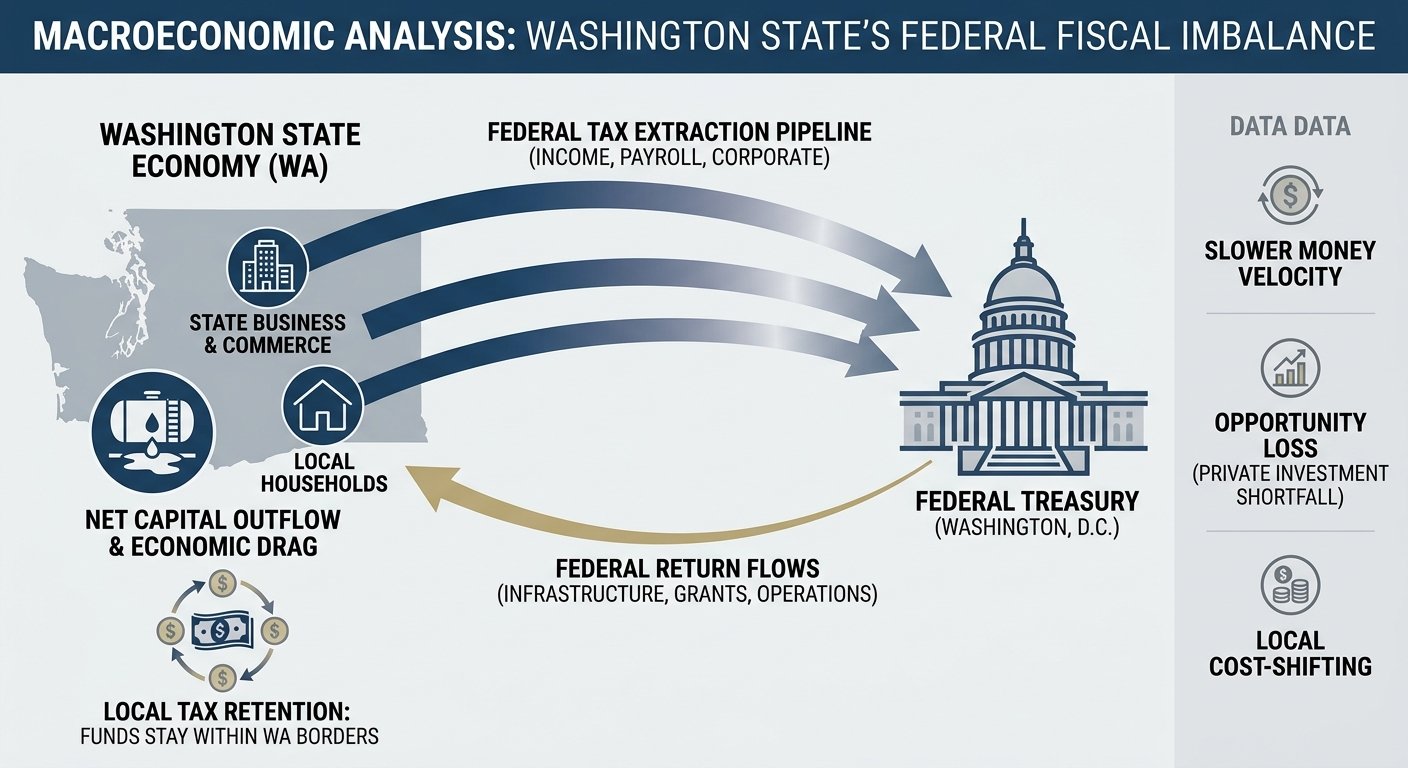
The Single Largest Drag on Washington State’s Economy: Federal Fiscal Imbalance
Managing state tax rates while ignoring federal capital flight is simply managing a structural decline. Washington State’s workers and businesses generate immense economic value, yet under-funded federal return rates continue to drain regional liquidity and stifle job growth. It’s time to look past local tax debates and demand national accountability. Read the full article to see how federal capital flight impacts our state and why federal tax reform is the true key to long-term economic vitality.
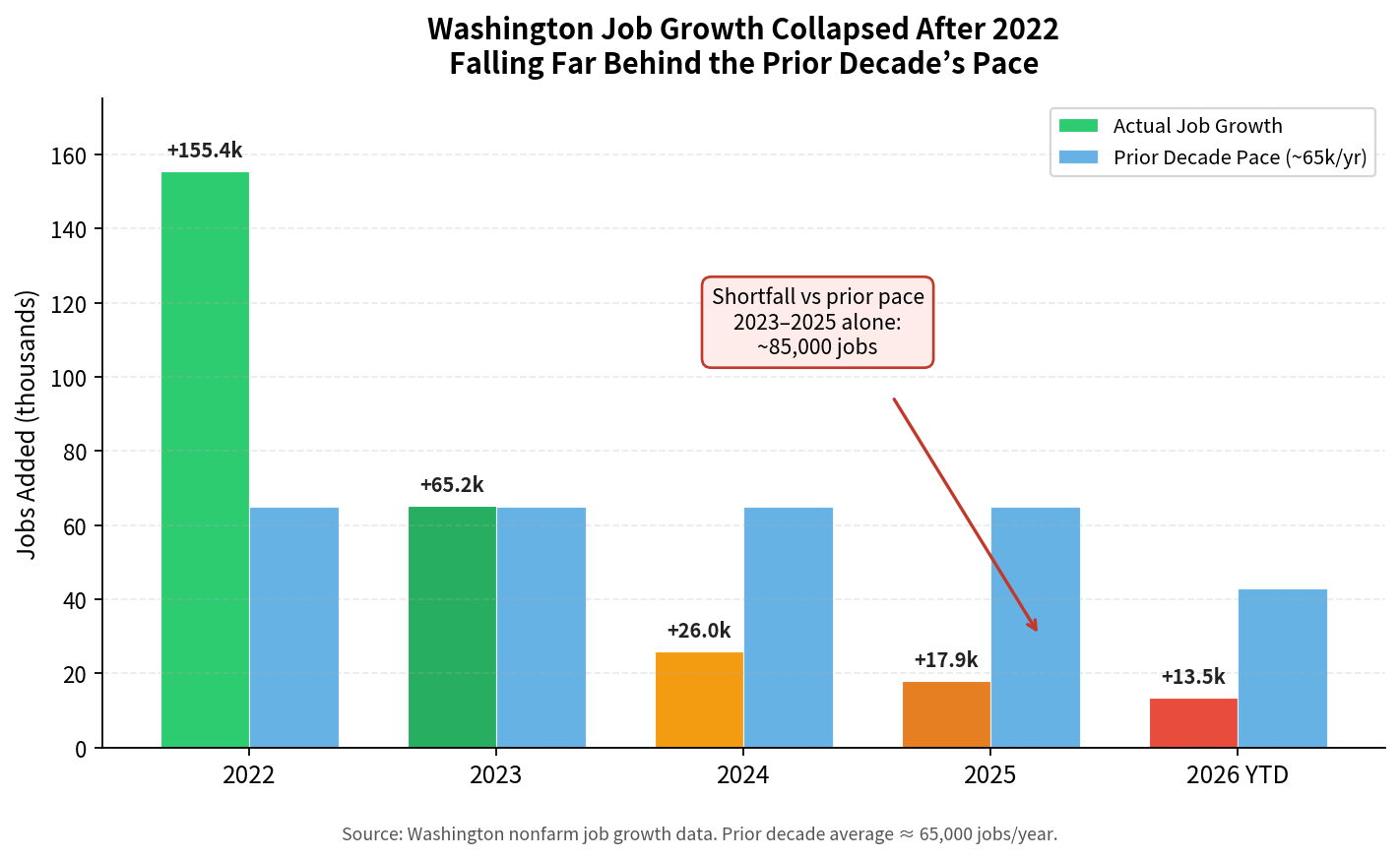
While America Spent $9 Trillion More Than It Taxed, Washington Fell 220,000 Jobs Behind
Washington’s Missing 220,000 Jobs
Between 2022 and 2026, the federal government spent nearly $9 trillion more than it collected in taxes. Washington did not share equally in that growth.
After a strong 2022, job creation collapsed. The state added only about 167,000 jobs from 2020 through 2025. At the previous decade’s pace, it would have added roughly 390,000. The difference: approximately 220,000 to 225,000 jobs that never appeared.
That shortfall is not just a number. It means less economic activity, slower business formation, money circulating more slowly through local communities, and greater pressure on state and local budgets. When growth lags, costs shift onto the remaining tax base.
The opportunity loss is real, measurable, and ongoing.
The Hidden Drag: How Federal Budget Imbalances Drain Regional Economies
Tax Cuts for the Wealthy Erode Money Velocity — and We’re Paying for the Cover-Up
Why Spending Cuts and Broad Taxes Slow Money Velocity
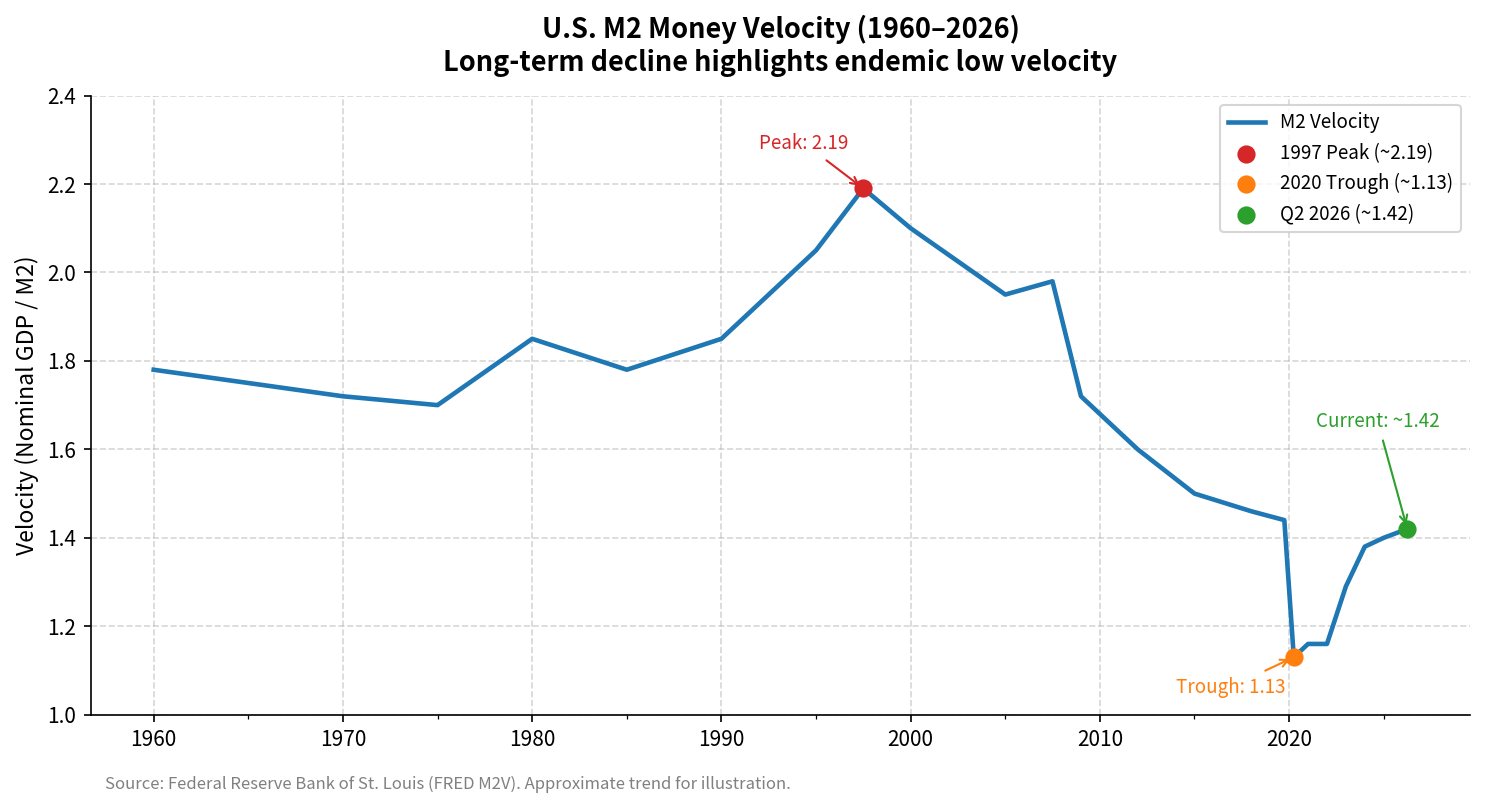
The Overlooked Engine of the Economy: Why Money Velocity Deserves Center Stage
Money velocity is one of the most overlooked yetcritical macroeconomic indicators. In the U.S., it has fallen from a 1997 peak of 2.19 to just 1.42 today—propped up by low rates, rising debt, and a tax system that rewards hoarding. Without this support the economy would contract. Discover why endemic low velocity is a structural problem that demands real overhaul, not just rate tweaks.
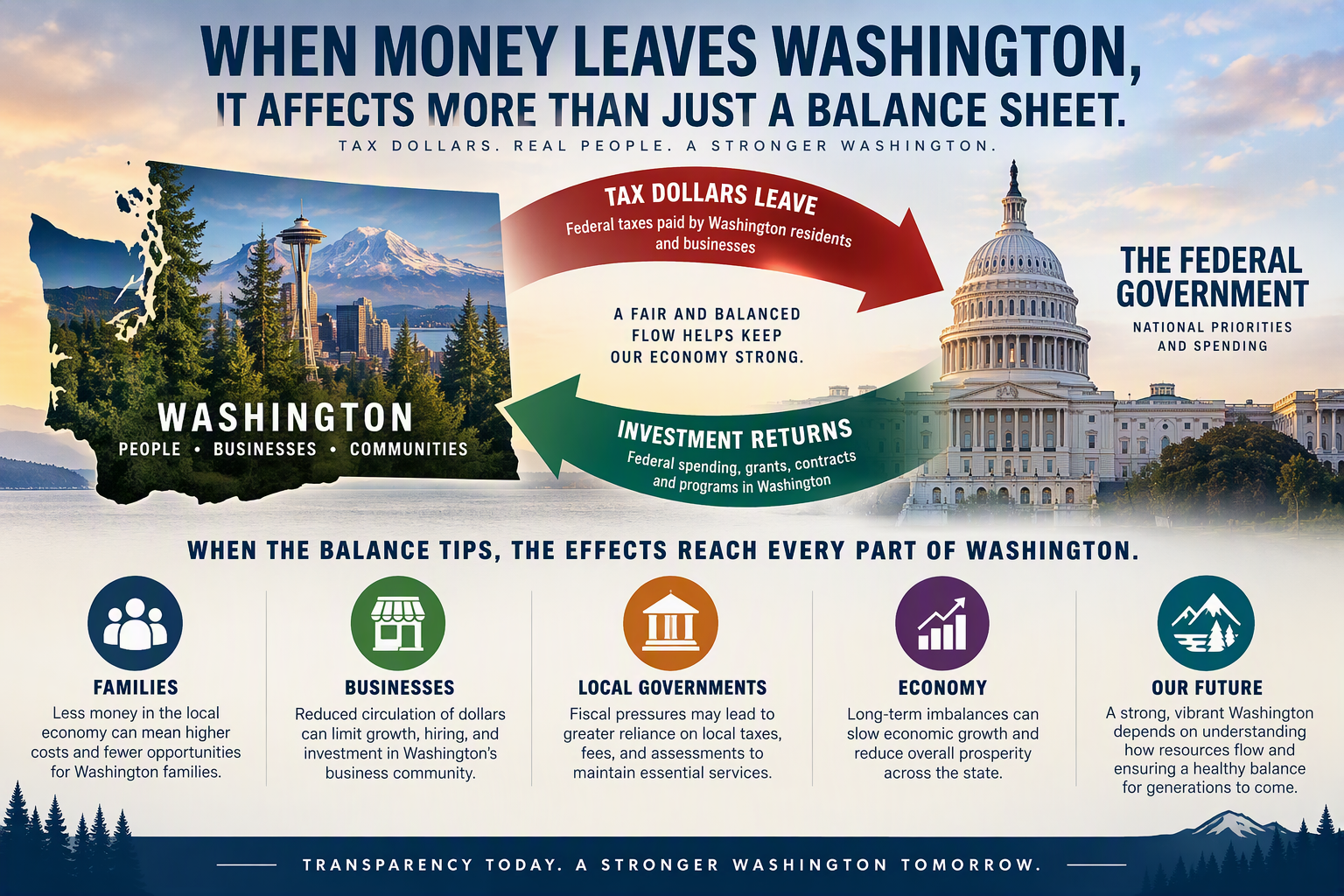
When Money Leaves Washington, What Happens Next?
Is Washington sending more money to the federal government than it receives in return?
If so, what does that mean for businesses, working families, local governments, and economic growth?
This article examines the concept of donor-state status, the potential impact of long-term fiscal imbalances, and why greater transparency is needed to understand how federal tax dollars affect Washington's economy.
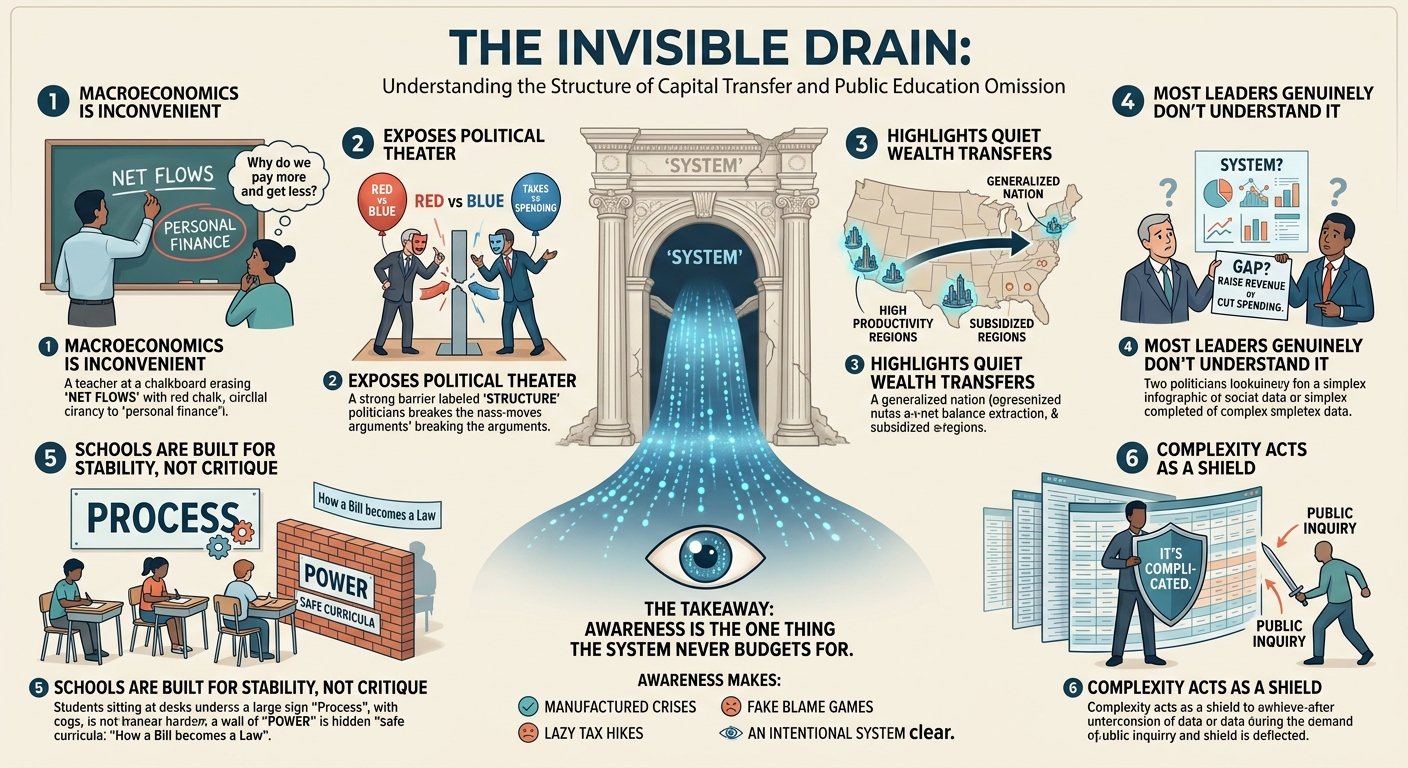
Why Nobody Teaches Macro-Fiscal Flows.
Why Nobody Teaches Macro-Fiscal Flows
Schools will teach you how to balance a checkbook or explain supply and demand, but they almost always skip macro-level fiscal flows: who pays into the system, who receives the funds, and why the money moves the way it does.
Why? Because once you track net flows, you stop being compliant—you start asking questions.
Analyzing systemic revenue flows cuts straight through standard political theater. When you see the actual balance sheet, common excuses like “we just need better management” or “we need new taxes” completely fall apart. The federal tax architecture quietly pulls capital out of high-productivity economic hubs and redirects it elsewhere, avoiding public debate by hiding behind layered data and claims that the system is "too complicated."
Understanding macro-fiscal flows changes how you view public policy. Once you track the money, artificial budget crises look manufactured, default tax hikes look lazy, and political infighting looks like a distraction.